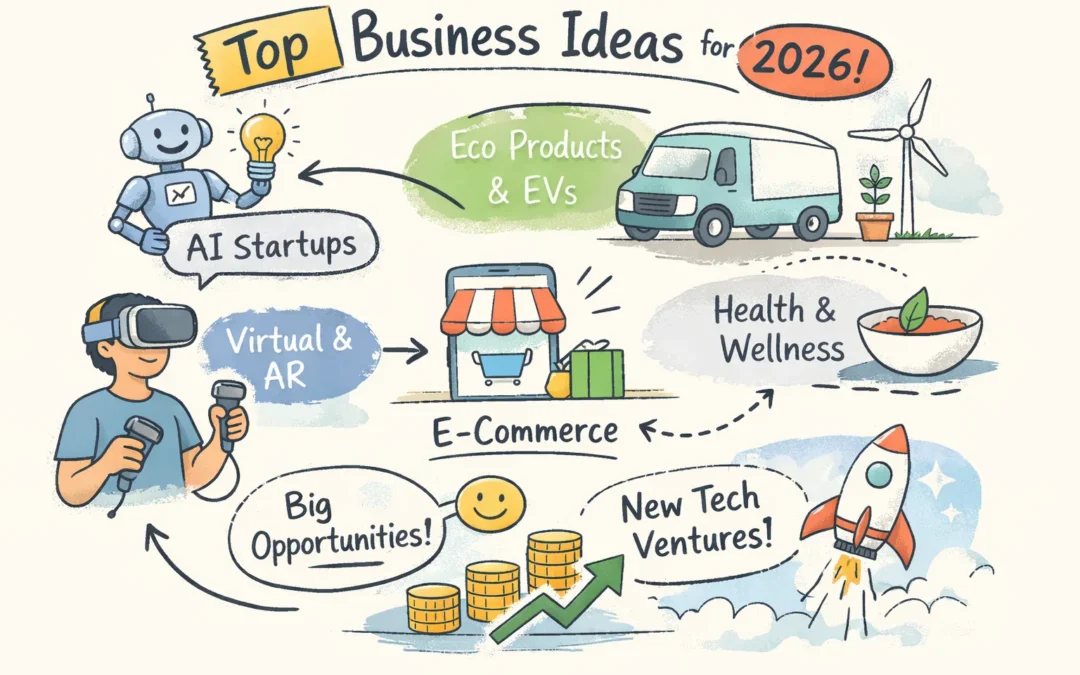
Want profitable business ideas you can launch without spending more than a few thousand dollars? Here are ten practical options that fit under $5,000 in startup costs, split into two paths: five digital, AI-first plays and five content, service, and product combos you can run from home. Each entry gives trend context, an estimated cost, a conservative year-one revenue band, and one quick validation you can run this week. These are tested, low-friction paths designed for rapid validation and early profit.
These suggestions target creators, freelancers, and bootstrapped founders who prefer low-burn, online-first models. The emphasis is on steady profit, with offers that prove demand quickly and start earning without long guesswork. Examples include an AI implementation consultant validated through a paid pilot and a content studio that begins by repurposing five clips. Pick an idea you can pre-sell within a month and use the tests below to confirm demand.
Quick summary
- Start small: Pick one idea you can launch for under $5,000 and focus on steady profit rather than rapid scaling. Small, repeatable services or products will get you customers and feedback faster than a complex roadmap.
- Two clear paths: Choose between AI-first digital plays that sell expertise, templates, or automations, and content-plus-product/service combos that bundle creative work with simple products. Match the path to your skills and the time you can commit.
- Validate fast: Run a pre-sale, paid pilot, or a quick repurpose test this week to get real demand signals. Use those results to decide whether to stop, iterate, or scale.
- Practical costs: Use realistic ranges when planning—services $500 to $5,000, stores $100 to $5,000—and model margins before spending. Budget for three months of fixed costs so you have a short runway for tests.
- 30-day launch: Prioritize essentials and aim to pre-sell or collect paying customers within a month. Follow a short checklist, automate the basics, and treat early revenue as the main metric.
The 10 profitable business ideas to launch in 2026
Digital and AI-first ideas (five tested, low-cost options). These models usually require tool fluency more than large capital and scale by selling expertise, templates, or automations. Below each item includes trend context, an estimated startup cost, a conservative year-one revenue band, and a quick validation test.
- AI implementation consultant: Small and midsize businesses are adopting AI for routine tasks but often lack implementation help. Expect startup costs of $500 to $3,000 for tools, a simple website, and outreach, and a conservative year-one revenue band of $20k to $120k depending on pilot conversions. Quick validation is to sell a paid pilot to one local SMB and deliver a practical roadmap in two weeks.
- AI-powered virtual assistant agency: Combine human judgment with AI tools to offer efficient outsourcing for busy operators. Plan on $300 to $2,000 to set up workflows, hire one operator, and build outreach, with a year-one revenue band around $25k to $90k from retainers. Quick validation: outreach to 20 prospects with a discounted pilot and measure booked demos.
- Micro-SaaS or no-code automation templates: Small businesses need repeatable automations and will pay for pre-built templates. Expect $500 to $5,000 to develop templates and a landing page, and a year-one band of $10k to $150k depending on pricing and distribution. Quick validation: pre-sell a template on a simple landing page and collect payment or signups.
- Faceless content studio (repurposing + short-form): Many creators want consistent short-form clips without recording new content, and repurposing existing assets is in demand. Startup cost is typically $200 to $1,500 to set up editing workflows and basic tools, with a year-one band of $15k to $80k via clip packages or retainers. Quick validation: offer free sample repurposes to five creators and track uptake and conversions.
- AI-augmented tutoring and micro-courses: Personalized learning supported by AI shortens content production and improves differentiation. Expect $200 to $1,500 for course hosting, materials, and simple ads, and a year-one band of $8k to $60k from live workshops and course sales. Quick validation: run a one-hour paid masterclass to test price sensitivity and demand.
Content, service and product combos (five practical, low-cost plays). These mixes of services and simple products are designed to earn quickly and iterate on customer feedback. Each option focuses on a tight niche and an easy validation path so you can reach profitability fast.
- Digital marketing consultant or social media manager: Small businesses regularly need marketing support and will pay for measurable results. Startup cost: $100 to $1,000 for tools, a portfolio, and outreach, with a year-one band of $12k to $100k based on retainer size. Quick validation: cold outreach offering a free audit and a discounted trial month to test conversion.
- Copywriting and SEO specialist: High-converting content remains a core need for online sellers and service providers. Launch for $100 to $800 with a portfolio site and tools, and expect $10k to $80k in year-one revenue from landing pages and retainers. Quick validation: write three paid landing page tests and measure conversion lift for each client.
- Print-on-demand niche brand (eco or hobby): Low-inventory e-commerce lets you test product-market fit without large stock costs. Startup cost: $50 to $1,000 for designs, mockups, and initial ads, and a year-one band of $5k to $60k depending on margins and ad performance. Quick validation: run a small ad to a product mockup page and measure conversion and cost per lead.
- Thrift and resell flips: Curated resale taps demand for unique items with low upfront inventory. Expect $200 to $2,000 for sourcing and listings, and a year-one band of $8k to $50k depending on margins and turnaround. Quick validation: list ten items and measure sell-through rates over two weeks.
- Subscription microbusiness (digital or physical): Recurring revenue makes small businesses predictable and easier to grow slowly. Startup cost: $300 to $4,000 for product samples, packaging, and initial marketing, and a year-one band of $12k to $120k with steady retention. Quick validation: launch a waitlist and pre-sell the first month to confirm demand.
All ten ideas favor quick validation over perfect planning. Run the suggested test this week and you will know whether to scale or stop. The next section shows a step-by-step method to pick the best fit for your skills and to prioritize the first three paid customers.
How to validate and pick the right idea (step-by-step)
Validation is about getting clear evidence, not polishing a product. Tests should answer one question so you can stop early or double down quickly. A five-step filter produces measurable outputs at each stage and helps move from idea to decision in days rather than months.
- Skills and budget match: Create a one-page capability and cost sheet that lists your core skills, required tools, and realistic startup budget. The output gives a clear go/no-go on whether you can deliver the offer with available resources. This document should take a few hours and prevents ideas that need too much upfront work from progressing.
- Customer problem test: Book 8 to 12 short calls or interviews with target customers to confirm a recurring pain. Record common language, objections, and willingness to pay during those conversations. If the pain appears across multiple interviews, you have a concrete demand signal to move forward.
- Demand test: Build a simple landing page and aim for pre-sell orders or 50 targeted email signups. Keep the page focused on one clear value proposition and one call to action. Conversion rate and pre-sales are the main metrics to decide whether to continue.
- Quick MVP or paid pilot: Deliver a minimal version of the service or product and charge for a short pilot to validate delivery and pricing. Aim for at least three paid pilots or initial revenue to test unit economics. Use pilot feedback to refine pricing, scope, and onboarding flow.
- Assess unit economics: Build a simple spreadsheet that calculates customer acquisition cost, lifetime value, and breakeven units. This step tells you whether the model can scale profitably or needs changes to price or acquisition. If the economics are weak, optimize acquisition costs or stop the idea.
If a step fails, iterate or stop; if it succeeds, fund the next test. Run three fast experiments this week to capture demand signals and focus each test on a single question to avoid confusing results. The following front-loaded tests produce the highest-impact signals about whether people will actually buy.
- One-page pre-sell landing page with Stripe: Use a clear headline, three concise benefits, and a buy button to capture buyers or deposits. Metric: conversion rate and pre-sales count. Time: build and launch in 48 hours to get immediate signals.
- Outreach template to 30 prospects: Send a short message offering a paid pilot with a calendar link and a first-user discount. Metric: demos booked and replies received. Time: two afternoons for research and outreach.
- Small paid social ad test: Run a $50 audience test to a sign-up page to measure CTR and cost per lead. Metric: CTR and cost per demo. Time: set up and learn within 72 hours.
Keep experiments inexpensive and highly focused; use the results to choose between side-hustle options or an online business path. After a winning pilot, convert steps into a repeatable sales playbook and scale slowly. Prioritize customer feedback and revenue before adding features or tools.
Startup costs, margins and revenue potential (practical math)
Startup costs vary by model, but realistic ranges make planning and comparison easier. Service businesses commonly launch for $500 to $5,000, online stores for $100 to $5,000, and local or food operations for $1,000 to $10,000 if you use shared kitchens or rentals. Plan for three months of fixed costs before steady revenue arrives and include a cash buffer accordingly.
Focus on contribution margin to see how each sale or billable hour affects profit. Contribution margin equals price minus variable cost, and breakeven units equal fixed costs divided by contribution per unit. For example, an AI consultant charging $150 per hour with $15 variable cost has a contribution of $135; with monthly fixed costs of $300 you need roughly three billable hours per month to cover them, and amortizing a $1,200 launch over six months raises that to about four billable hours per month.
The same math applies to e-commerce. If a shirt sells for $30 and fulfillment costs $12, contribution before ads is $18; add $10 in ad spend and net contribution drops to $8. With a $600 launch amortized over three months you need about 25 sales per month to cover launch costs. Monitor customer acquisition cost closely to keep margins healthy.
Concrete archetype budgets help translate theory into numbers. An AI consultant with a $1,200 launch (website, tools, outreach) typically sees margins near 80 percent on billable time and year-one targets of $30k to $80k. A print-on-demand brand with a $600 launch can target $10k to $50k with net margins around 20 to 40 percent, while a local cleaning subscription launched for about $1,000 (insurance, supplies, local ads) can expect 50 to 70 percent margins and a year-one band of $25k to $90k.
Check cash flow at three months by comparing bookings and ad spend to your amortized launch and monthly fixed costs. Adjust price or marketing spend if the breakeven point looks far off. These simple calculations prevent spending ahead of proven demand.
A 30-day launch checklist and tools to move fast
You can launch a revenue-producing offer in 30 days by focusing on essentials and ignoring shiny distractions. The lean plan below breaks daily priorities across four weeks so you spend time proving demand rather than polishing features. Treat the month as a sprint: clarity over perfection and a strict budget for validation.
Week 1 (days 1 to 7): Finalize the offer and run micro-research. Start by writing a one-sentence value promise, defining the target customer, and listing three competitors to spot a gap. Secure a domain and email, sketch pricing and delivery, and draft a one-page landing page; finish by running a five-minute pre-sell with friends or your network to gather quick feedback. Consider reviewing short idea prompts and branding options from a curated business ideas resource while you pick names and positioning.
Week 2 (days 8 to 14): Build the minimum site and payment flow. Choose Shopify or WooCommerce, add product or service pages, and connect Stripe along with basic policies, and review the legal requirements for starting a small business. Create sales copy and images with Canva, add lead capture and thank-you pages, then test the checkout and the customer path to ensure payments work.
Weeks 3 and 4 (days 15 to 30): Set up simple operations, run a pilot, and prepare a soft launch. Use Trello or a basic workflow to manage customers, create a Mailchimp list for follow-ups, and run a pilot with three to five customers. In the final week collect testimonials, fix the top three friction points, automate invoicing and lead capture, and iterate based on customer feedback.
Essential toolkit and expected early costs:
- Choose Shopify (from $29/month) or WooCommerce with hosting at $5 to $15/month and use Stripe for payments. Pick the platform that matches your SKU count and customization needs. See Miscellaneous, Little Business Ideas for additional quick resources.
- Create visuals with Canva (free or roughly $13/month), and use Google Workspace (from $6/user/month) for professional email. Start on Mailchimp’s free tier for simple email capture and sequences.
- Manage tasks with Trello’s free tier and schedule social posts with Buffer or a similar scheduler’s free plan. Keep processes simple and avoid paying for premium tools until revenue covers them.
- Use Zapier or Make’s free tiers to automate lead capture, invoicing, and welcome sequences. Automations reduce manual work and make early pilots repeatable.
Begin on free plans and expect typical early costs to sit well under $100 per month. Automate lead capture, invoicing, and the welcome sequence first so customers experience a smooth onboarding. Focus on revenue and feedback before adding paid tools.
Refine and launch with Little Business Ideas’ AI playbook
Little Business Ideas’ AI playbooks bundle the templates and workflows you need to move from idea to a testable offer without building every piece from scratch. Each playbook includes a tested budget, a recommended tool stack, email and outreach scripts, and automation prompts tailored to the idea archetype. Use a playbook to map directly to the 30-day checklist and reduce validation time from weeks to days.
Playbooks include ready-to-edit landing copy, outreach sequences, simple ad creatives, and follow-up automations you can deploy the same day. For a home-based service playbook, that can include local outreach scripts and a $200 starter budget scenario so you can test demand without overspending. Pick two or three ideas that match your skills and budget, run the fast tests from the validation section, and use the playbook to execute the 30-day checklist.
Finish with two concrete outcomes: a short list of two to three business ideas and the three actions you will take this week to validate them. The ten ideas above were chosen so you can validate quickly, launch cheaply, and scale sensibly.
Take these business ideas and launch quickly
These ten business ideas offer low-cost, practical paths you can start with under $5,000. You do not need perfect products to learn; quick tests and simple math reveal what pays. Two priorities are clear: validate fast, and favor healthy margins over flashy growth. Small experiments beat long plans when you want real revenue. For additional curated suggestions and inspiration, see this list of the best small business ideas.